
Midlothian House, Dalkeith
An ambitious programme of retention, repair and adaptation transforming Midlothian House into a low-energy civic building. The project reimagines the Council headquarters as a welcoming public destination while preserving the embodied value of the existing structure.
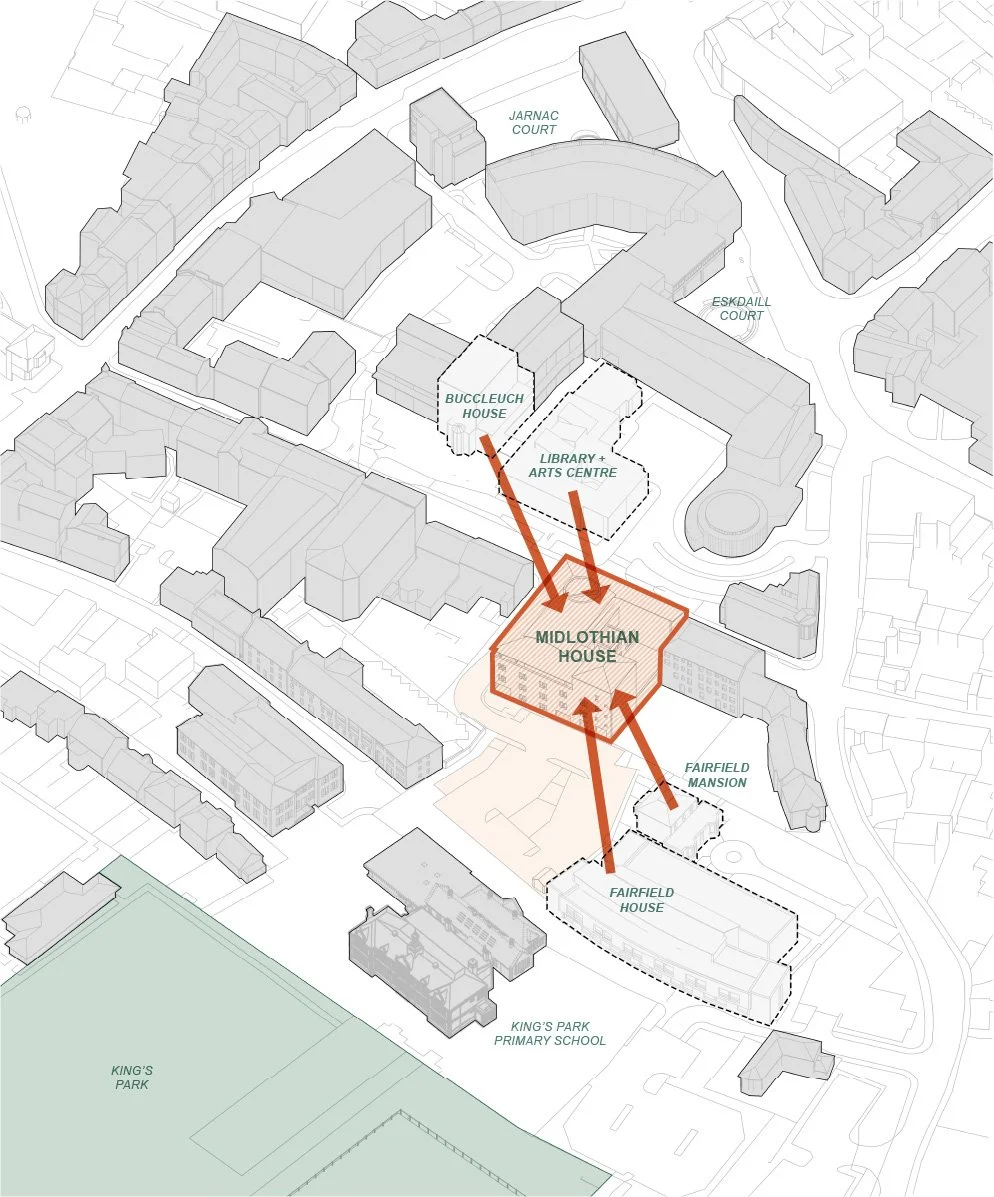
Midlothian House occupies a prominent position on the edge of Dalkeith town centre and has served as the administrative heart of Midlothian Council since the early 1990s. After more than three decades of use, the building faced a series of significant challenges. Its external envelope had deteriorated to the point of failure, creating safety concerns, reducing environmental performance and threatening the long-term future of the building. Faced with these conditions, the project asks a fundamental question: what is the value of retaining and renewing a civic building rather than replacing it?
The answer lies in both environmental responsibility and civic continuity. Buildings such as Midlothian House embody a considerable investment of material, energy and public resource. While the existing façade had reached the end of its life, the primary concrete structure remained robust and capable of supporting a new future. Rather than pursue demolition and reconstruction, the project adopts a strategy of repair, retention and adaptation, preserving the embodied carbon of the existing structure while extending its useful life for generations to come.
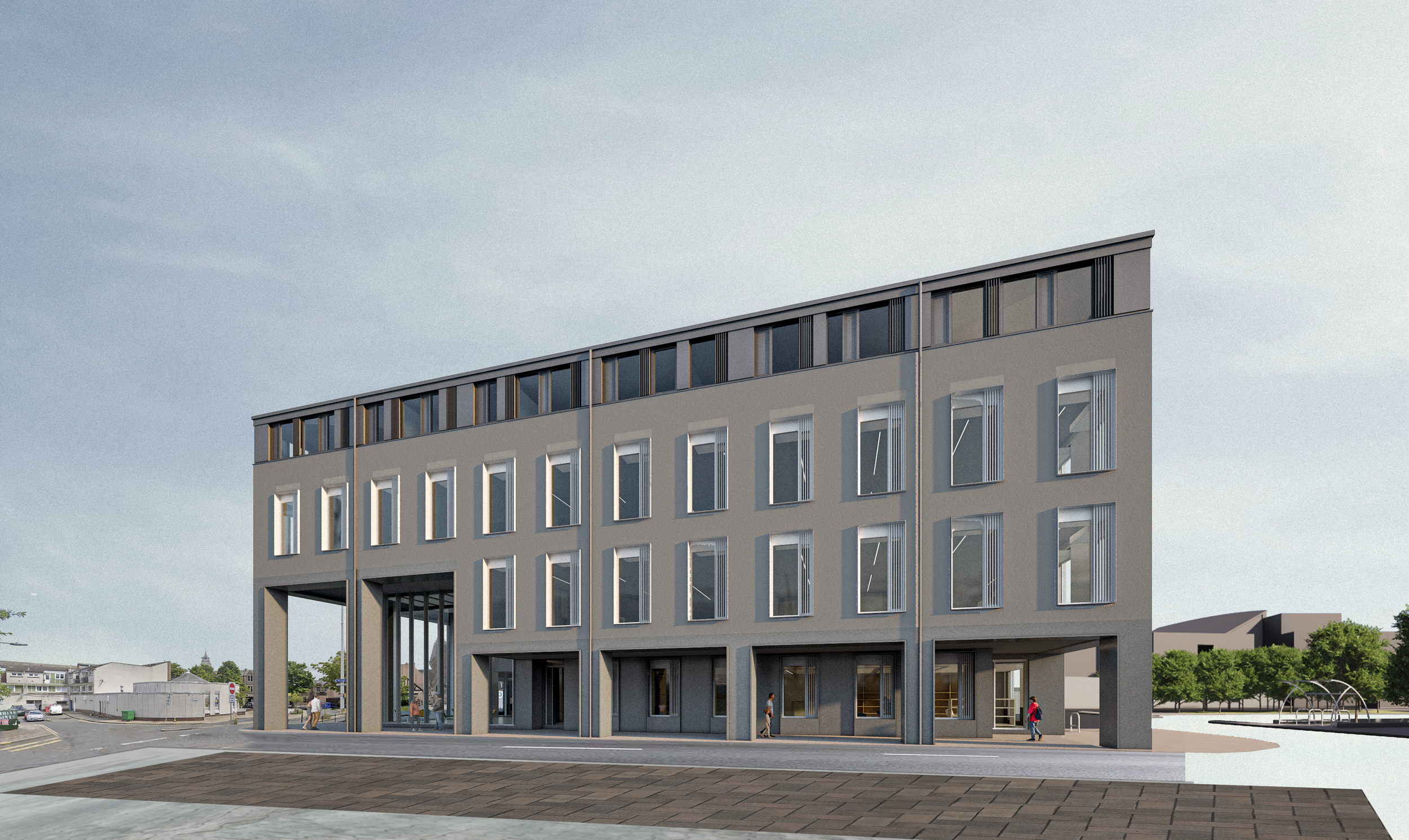
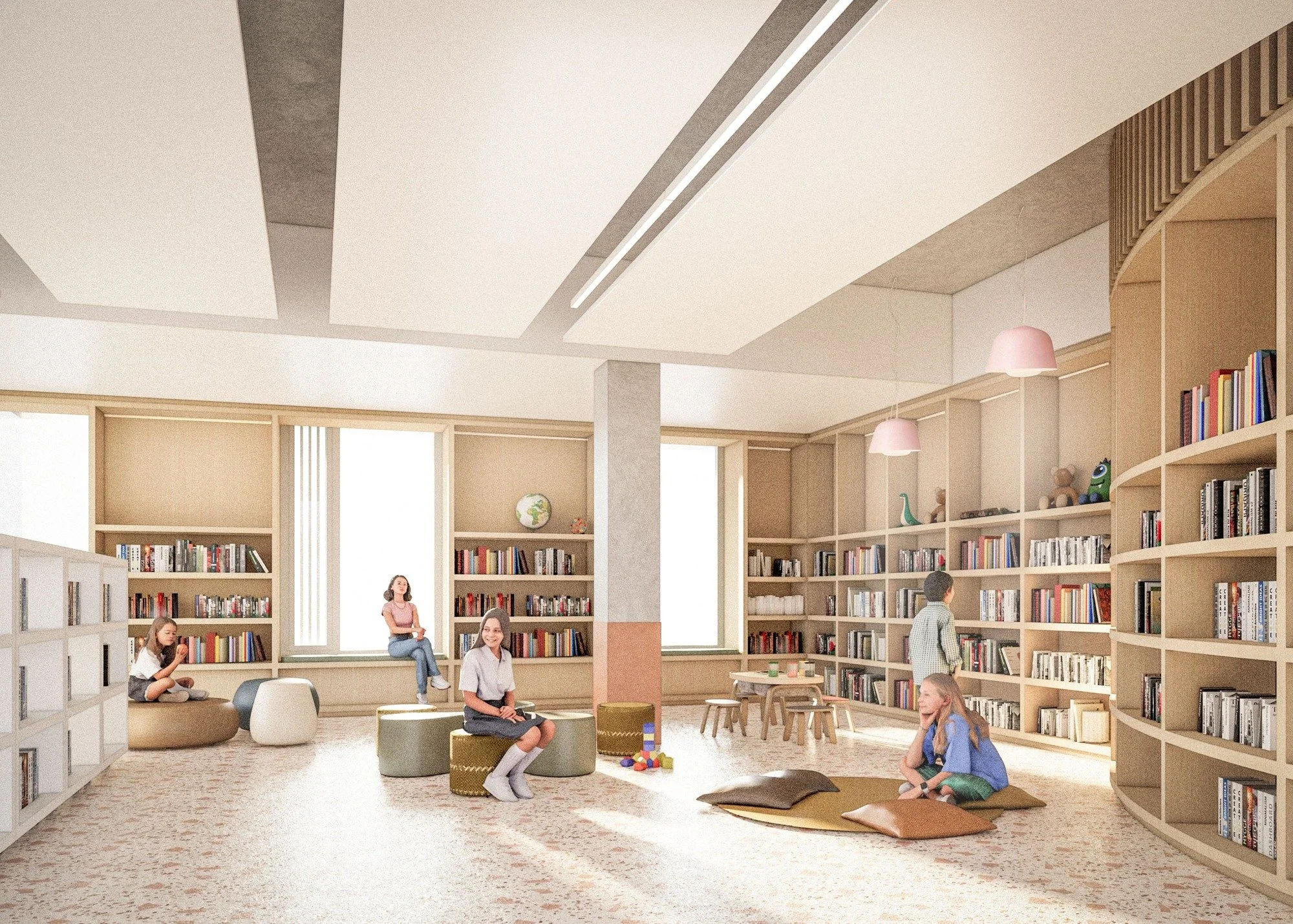
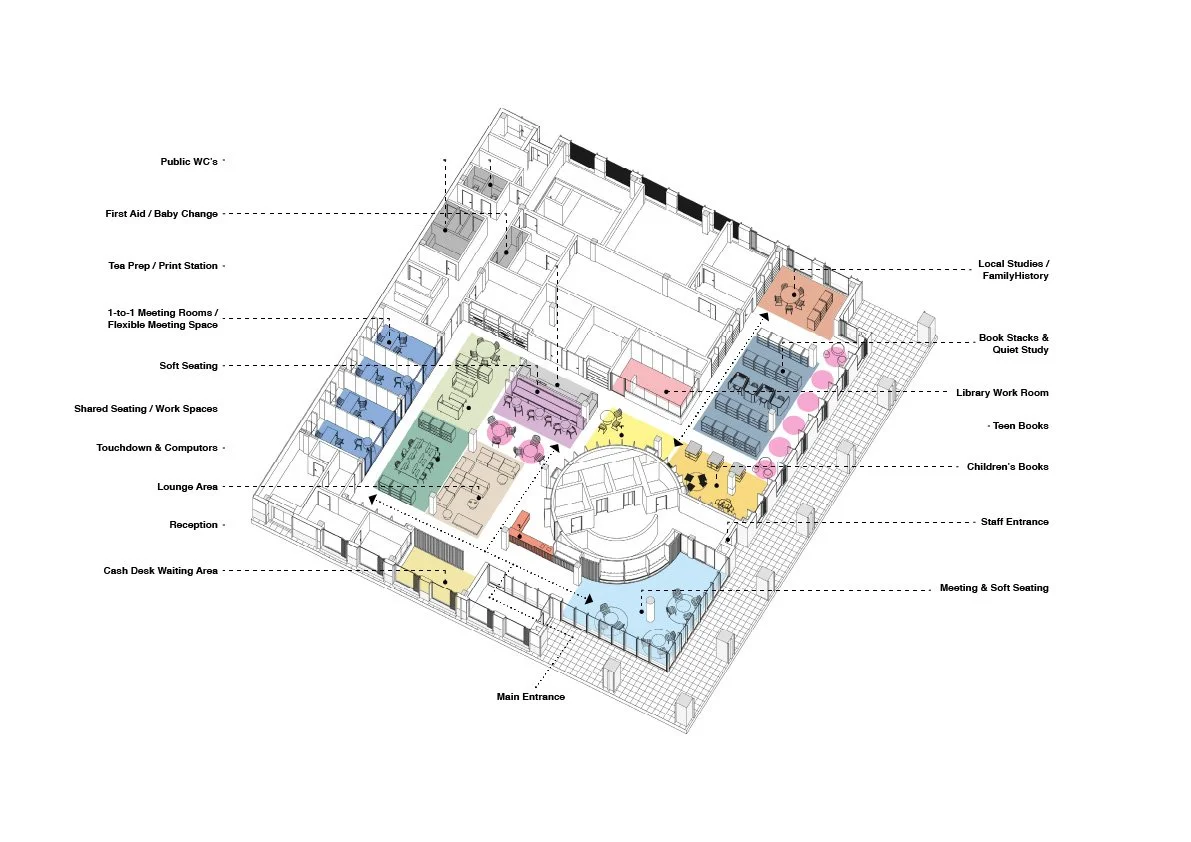
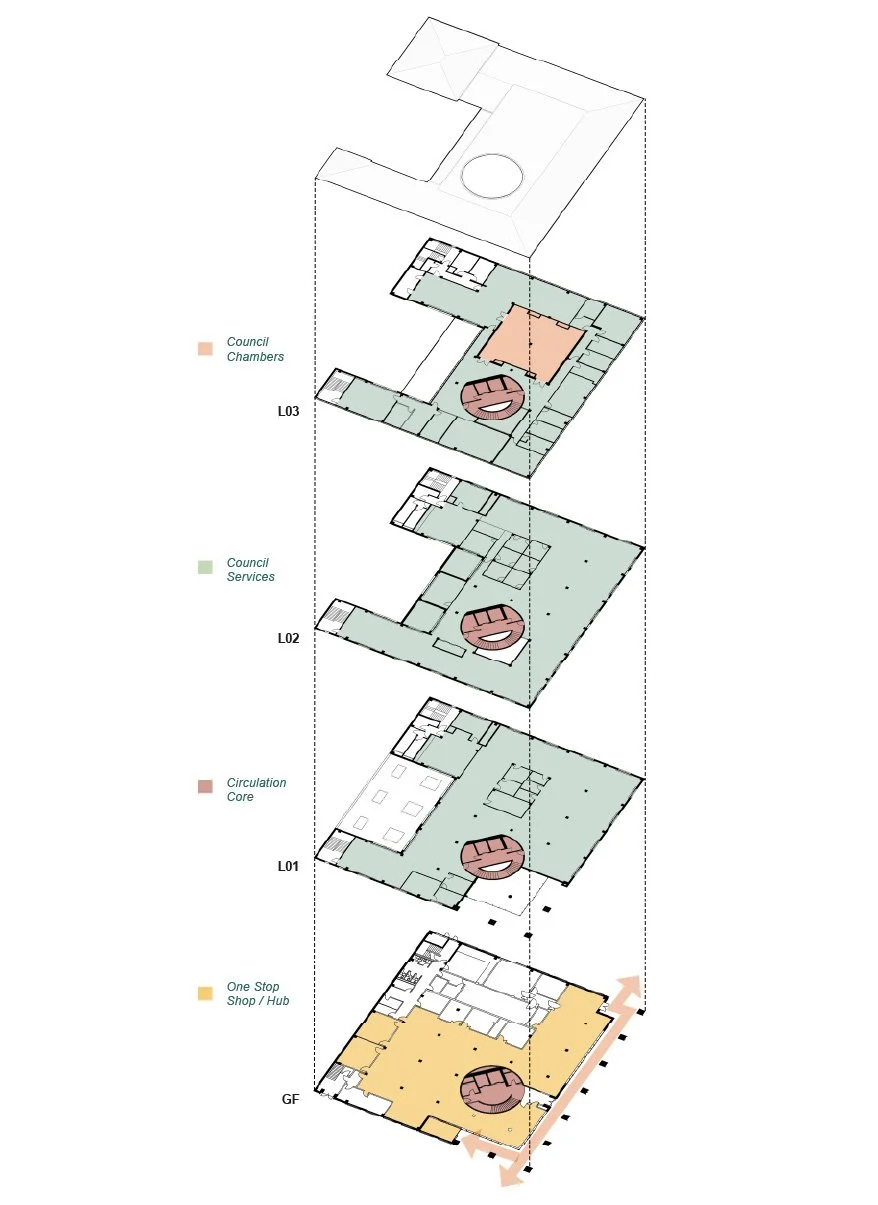
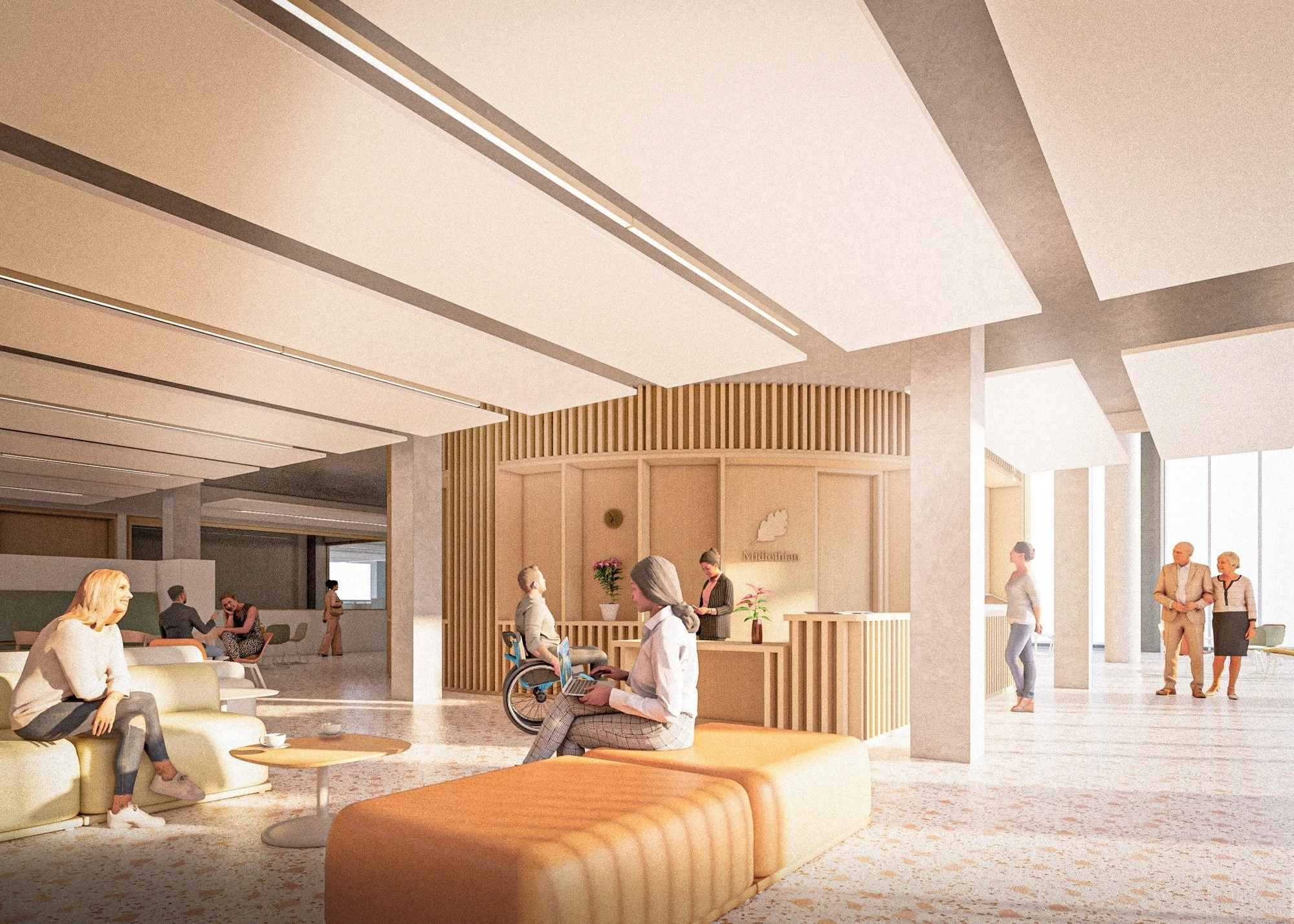
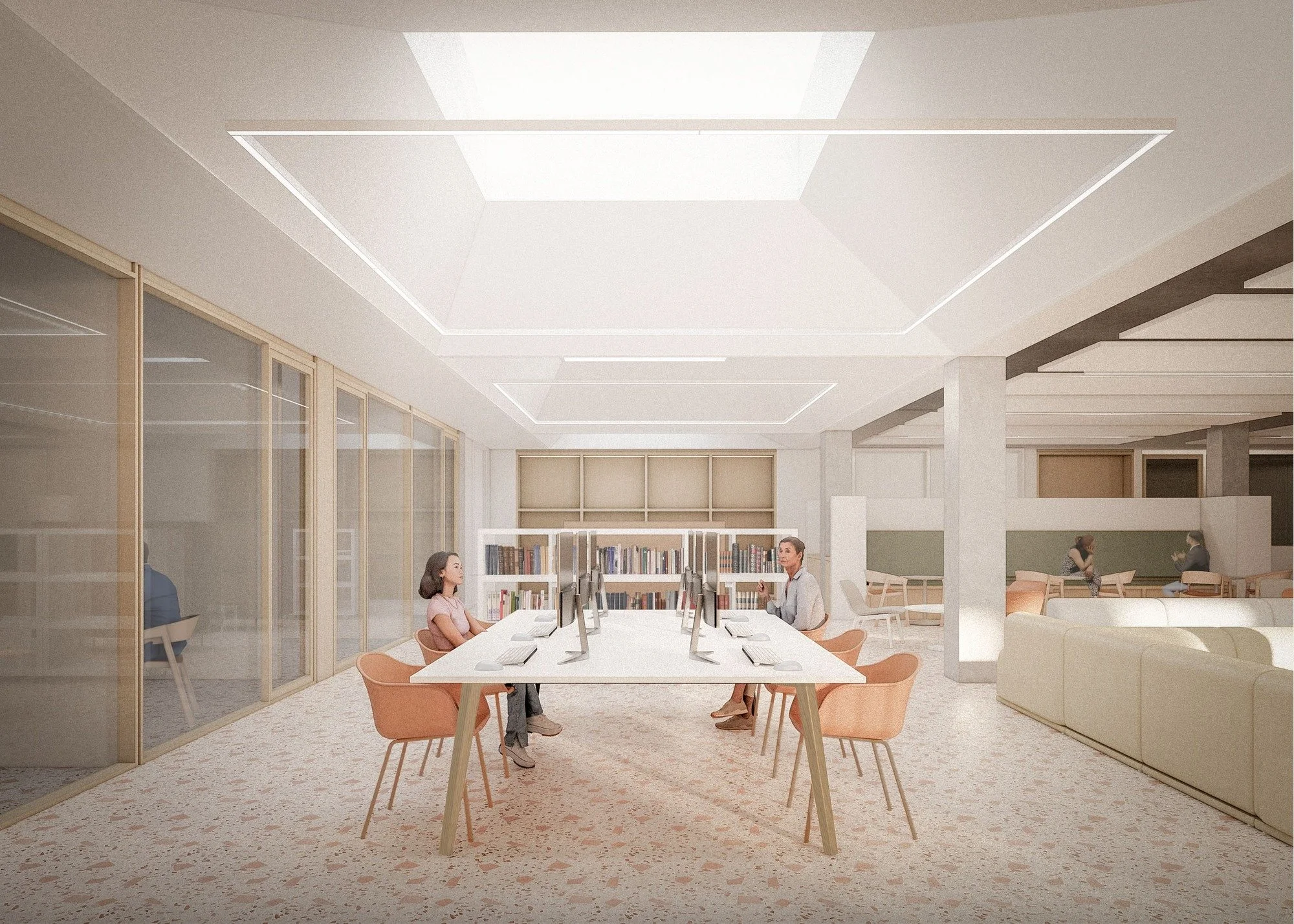
The project is founded on the belief that civic buildings should evolve alongside the communities they serve. Alongside a comprehensive retrofit of the external envelope and building services, the proposals reimagine the ground floor as a more open and accessible public destination. A new Library, Community Hub and One Stop Shop bring together a range of council services within a single shared environment, creating a building that is more welcoming, inclusive and connected to daily civic life. Improved accessibility, new meeting spaces and a more visible public entrance reinforce the building's role as a place of exchange between the Council and the wider community.
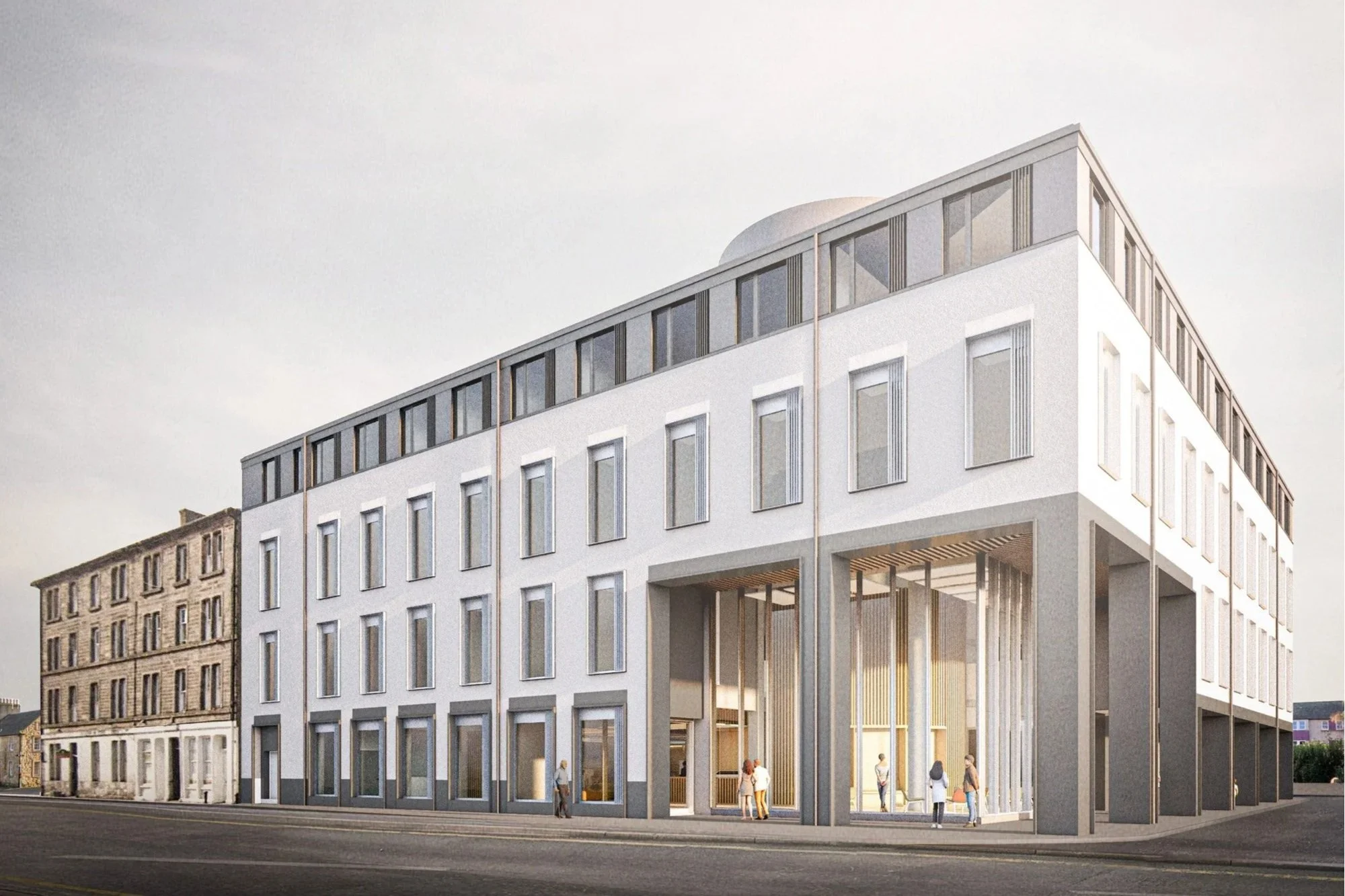
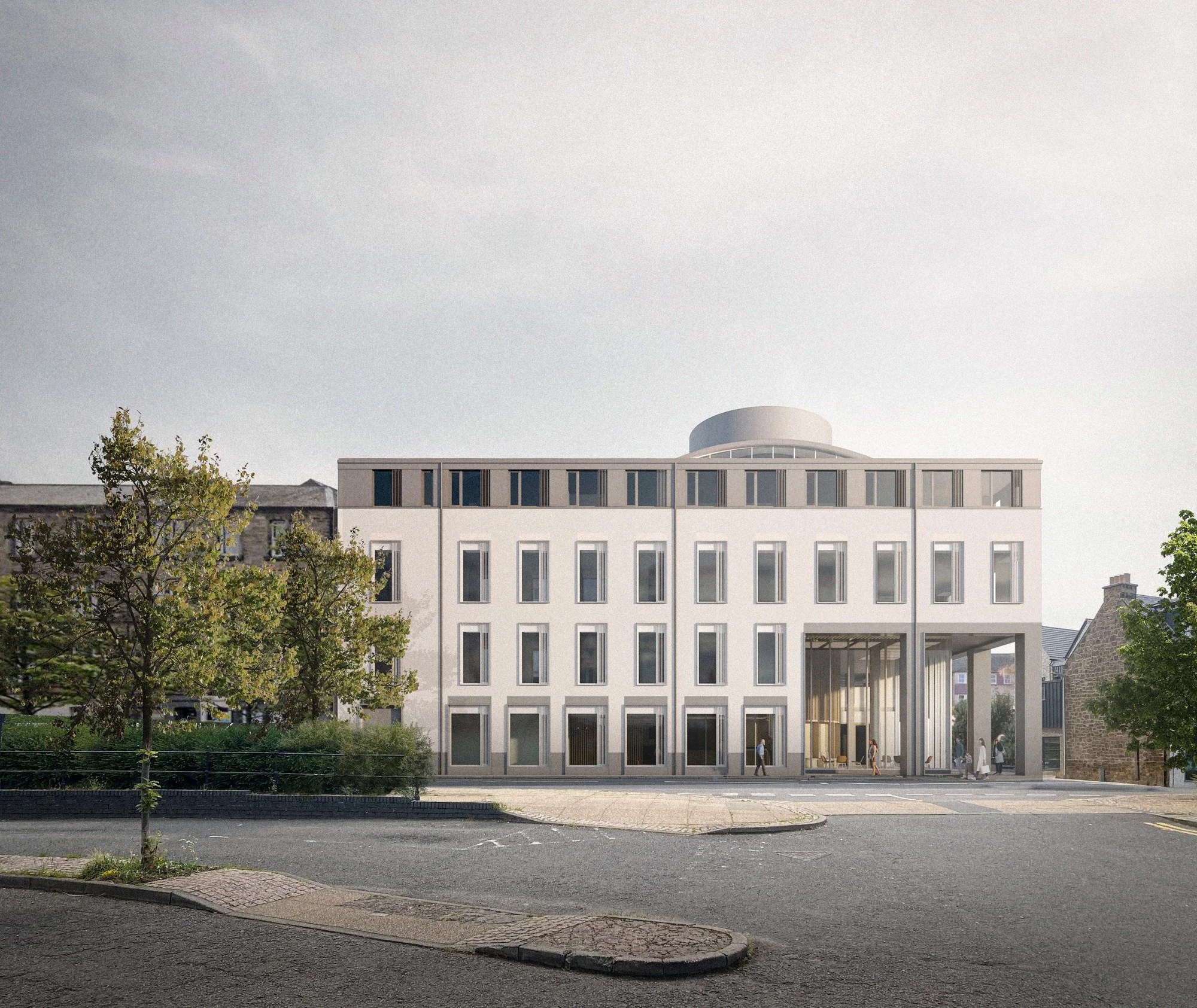
Architecturally, the project seeks to reveal a stronger civic character through a process of simplification and repair. The failing masonry envelope is replaced with a new high-performance façade that improves thermal performance, daylight and ventilation while establishing a clearer architectural identity. A robust stone base provides a sense of permanence and dignity at street level, anchoring the building within its urban setting. Above, carefully proportioned openings and a calm arrangement of rendered surfaces create a more measured and coherent relationship with the surrounding townscape.
The existing circular drum remains at the centre of the composition. Retained and re-clad, it provides continuity between the building's past and future while acting as a familiar point of orientation within the renewed structure. New roof terraces, upgraded workspaces and contemporary building services support new patterns of occupation and use, allowing the building to adapt to changing ways of working while maintaining its civic presence.
Midlothian House demonstrates how existing civic buildings can be transformed through thoughtful intervention rather than replacement. The project retains what is valuable, repairs what has failed and adapts what is no longer fit for purpose. In doing so, it establishes a new chapter for the building, one that combines environmental responsibility with civic ambition, ensuring that Midlothian House continues to serve the people of Midlothian as a durable, low-energy and publicly accessible building for decades to come.
-
Area
4,199m²Project Start
2024Construction Start
2025Completion Date
TBCClient
Midlothian CouncilContract
2-Stage Design & Build -
Client
Midlothian CouncilArchitect
Reiach and Hall ArchitectsCost Consultant / Project Manager
Currie & BrownStructural Engineer
Will Rudd DavidsonM&E Engineer
RybkaAECB CarbonLite Certifier
EcosphericCDM Consultant / Principal Designer
Alliance CDMContractor
McLaughlin and Harvey -
Midlothian House occupies a prominent position on the edge of Dalkeith town centre and has served as the administrative heart of Midlothian Council since the early 1990s. After more than three decades of use, the building faced a series of significant challenges. Its external envelope had deteriorated to the point of failure, creating safety concerns, reducing environmental performance and threatening the long-term future of the building. Faced with these conditions, the project asks a fundamental question: what is the value of retaining and renewing a civic building rather than replacing it?
The answer lies in both environmental responsibility and civic continuity. Buildings such as Midlothian House embody a considerable investment of material, energy and public resource. While the existing façade had reached the end of its life, the primary concrete structure remained robust and capable of supporting a new future. Rather than pursue demolition and reconstruction, the project adopts a strategy of repair, retention and adaptation, preserving the embodied carbon of the existing structure while extending its useful life for generations to come.
The project is founded on the belief that civic buildings should evolve alongside the communities they serve. Alongside a comprehensive retrofit of the external envelope and building services, the proposals reimagine the ground floor as a more open and accessible public destination. A new Library, Community Hub and One Stop Shop bring together a range of council services within a single shared environment, creating a building that is more welcoming, inclusive and connected to daily civic life. Improved accessibility, new meeting spaces and a more visible public entrance reinforce the building's role as a place of exchange between the Council and the wider community.
Architecturally, the project seeks to reveal a stronger civic character through a process of simplification and repair. The failing masonry envelope is replaced with a new high-performance façade that improves thermal performance, daylight and ventilation while establishing a clearer architectural identity. A robust stone base provides a sense of permanence and dignity at street level, anchoring the building within its urban setting. Above, carefully proportioned openings and a calm arrangement of rendered surfaces create a more measured and coherent relationship with the surrounding townscape.
The existing circular drum remains at the centre of the composition. Retained and re-clad, it provides continuity between the building's past and future while acting as a familiar point of orientation within the renewed structure. New roof terraces, upgraded workspaces and contemporary building services support new patterns of occupation and use, allowing the building to adapt to changing ways of working while maintaining its civic presence.
Midlothian House demonstrates how existing civic buildings can be transformed through thoughtful intervention rather than replacement. The project retains what is valuable, repairs what has failed and adapts what is no longer fit for purpose. In doing so, it establishes a new chapter for the building, one that combines environmental responsibility with civic ambition, ensuring that Midlothian House continues to serve the people of Midlothian as a durable, low-energy and publicly accessible building for decades to come.
Sketchbook